
Infrastructure
Telecom Industry’s Infrastructure-First Approach Failing to Close Connectivity Gaps – Ajuzie
Collaboration · Inclusion · Infrastructure · Investment · Policy
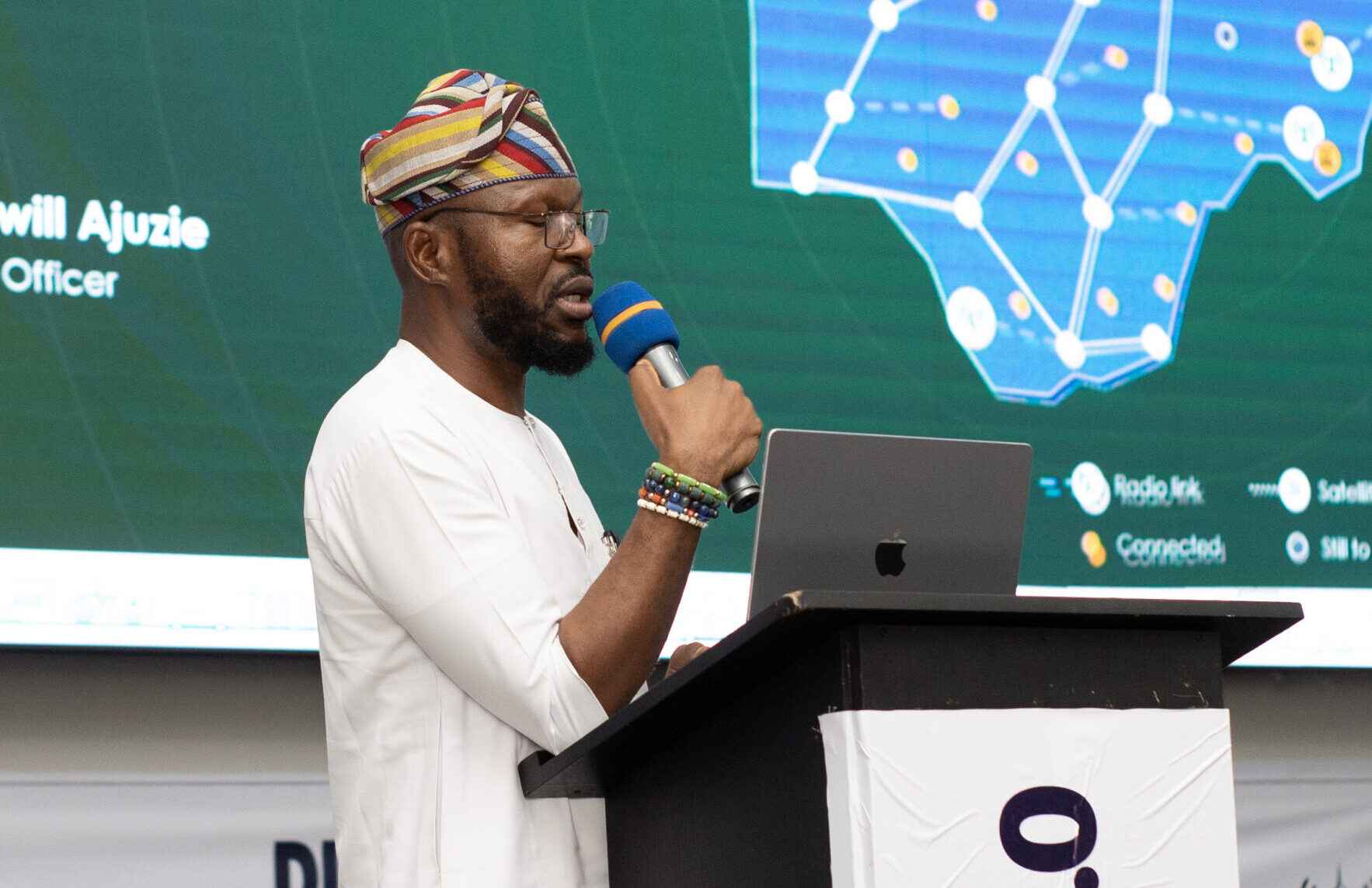
Nigeria may be getting its approach to closing connectivity gaps wrong, with telecoms expert and Group Chief Operating Officer of WTES Limited, Chidi Ajuzie, challenging the industry’s infrastructure-first model and exposing a contradiction in which expanding network coverage has failed to bring millions of Nigerians online.
Presenting a paper titled From Infrastructure to Access: Building the Fibre, Tower and Technology Ecosystem for Rural Connectivity at the second edition of the Rural Connectivity Summit (RuralConnect 2.0), organised by Business Metrics Limited in Lagos on Tuesday, Ajuzie argued that expanding network coverage without addressing the barriers preventing people from using available services could undermine efforts to close Nigeria’s digital divide.
His presentation highlighted a growing disconnect between infrastructure deployment and actual usage, with an estimated 140 million people living within mobile broadband coverage but not using mobile internet.
He identified affordability, inadequate electricity, device costs and limited digital literacy as critical barriers, arguing that rural connectivity must move beyond extending networks to ensuring that underserved communities can meaningfully access and use digital services.
He argued that the country’s connectivity challenge is increasingly shifting from network availability to affordability, electricity access, digital literacy and the capacity of underserved communities to use available services.
The distinction is significant for Nigeria, where successive investments in fibre infrastructure, mobile networks and broadband programmes have expanded coverage, yet rural communities continue to lag behind urban centres in internet use, financial inclusion and access to digital public services.
Ajuzie’s presentation showed that the number of people living in unserved and underserved locations declined from 36.8 million across 207 clusters in 2013 to 23.4 million across 87 clusters in 2024.
However, the number of people covered by mobile broadband but not using mobile internet rose from 120 million in 2023 to 140 million in 2025.
The figures reveal a widening disconnect between infrastructure deployment and actual usage, suggesting that extending network coverage alone may not be sufficient to deliver the country’s digital inclusion ambitions.
He explained that for policymakers and telecommunications investors, the implication is that the next phase of rural connectivity must address not only the absence of networks but also the economic and practical barriers preventing people from using them.
The infrastructure paradox
Nigeria’s telecommunications market has recorded substantial growth, with 195 million active mobile lines and broadband penetration of 57.4 per cent as of July 2026, according to figures earlier released by the Nigerian Communications Commission (NCC).
Despite this, Ajuzie, worried that national averages obscure the scale of the rural access deficit.
He showed through his data-laden presentation that rural 4G coverage stood at 48 per cent, while rural electricity access was only 23.5 per cent. Mobile internet usage among rural adults was 33 per cent, compared with 66 per cent in urban areas.
The disparities extend beyond connectivity. While 79 per cent of urban adults reportedly owned an internet-enabled phone, the proportion in rural communities was 51 per cent. Formal financial inclusion stood at 85 per cent in urban areas against 58 per cent in rural communities.
“These figures suggest that the digital divide is not a single infrastructure problem. It is a chain of interconnected disadvantages in which inadequate electricity, expensive devices, limited digital skills and insufficiently accessible services reinforce one another.
“A community may have a mobile signal without reliable electricity to charge devices. Residents may live within a broadband footprint but lack smartphones capable of accessing internet services. Others may own compatible devices but find data costs, digital skills or the relevance of available content prohibitive,” Ajuzie said.
He further placed these barriers within a wider argument about social and economic exclusion, describing people without connectivity as unknown, unseen, unheard and unreached.
In his assessment, rural connectivity is therefore an inclusion and governance issue before it is a telecommunications issue.
He noted that 42 per cent of rural adults were outside formal financial services, while two in three rural adults did not use mobile internet, while citing an estimated 23.4 million people living in 87 clusters with little or no telecommunications service.
“The consequences extend to public administration and social protection, particularly where access to identity systems, digital accounts and government services depends on connectivity,” he added.